Fuel Storage Tanks
How Do Commercial Fuel Storage Tanks Support Fleet and Facility Operations?
Commercial fuel tanks are essential infrastructure components for retail fueling, transportation logistics, and emergency backup power systems. Selecting the correct storage configuration requires balancing strict environmental rules, land availability, fluid chemistries, and structural safety requirements.
Whether your facility manages a high-volume retail forecourt or an isolated emergency backup system, the right fuel storage tank completely mitigates environmental liabilities while protecting your liquid assets.
Vehicle fuel storage tank applications typically focus on high-traffic retail gas stations and commercial fleet vehicle operations. In these environments, the system must deliver rapid throughput, precise inventory tracking, and complete compatibility with modern fuel chemistries.
Conversely, fuel oil storage tank applications serve critical emergency infrastructure, including data centers, hospitals, and call centers. For these high-stakes facilities, fuel containment systems provide vital operational security, ensuring standby generators function without interruption during critical utility grid failures.
Why Work With Northwest Pump?
Operating as the West’s largest distributor of petroleum equipment, industrial pumps, and air compressors since 1959, Northwest Pump brings decades of engineering capability to your project footprint. Celebrating more than 65 years of continuous industry service, we provide comprehensive procurement and logistics management for retail, commercial, and industrial facilities across the country.
Our approach to equipment distribution is anchored in our primary company values: Relentless Service, Integrity, Ethics, Partnership, Accountability, and a deep commitment to Embrace Safety. We do not merely distribute components. We serve as an active partner to engineers, contractors, and procurement officers, delivering verified, project-ready bills of materials down to the last specialized fitting.
We maintain long-standing, trusted partnerships with top-tier industrial and petroleum manufacturers, so your project gets code-compliant, highly reliable equipment. From single installations to multi-site fleet operations, our product specialists ensure your fuel storage systems are built for long-term safety, efficiency, and UST regulation compliance.
Engineering Specifications for Underground Fuel Storage Tanks
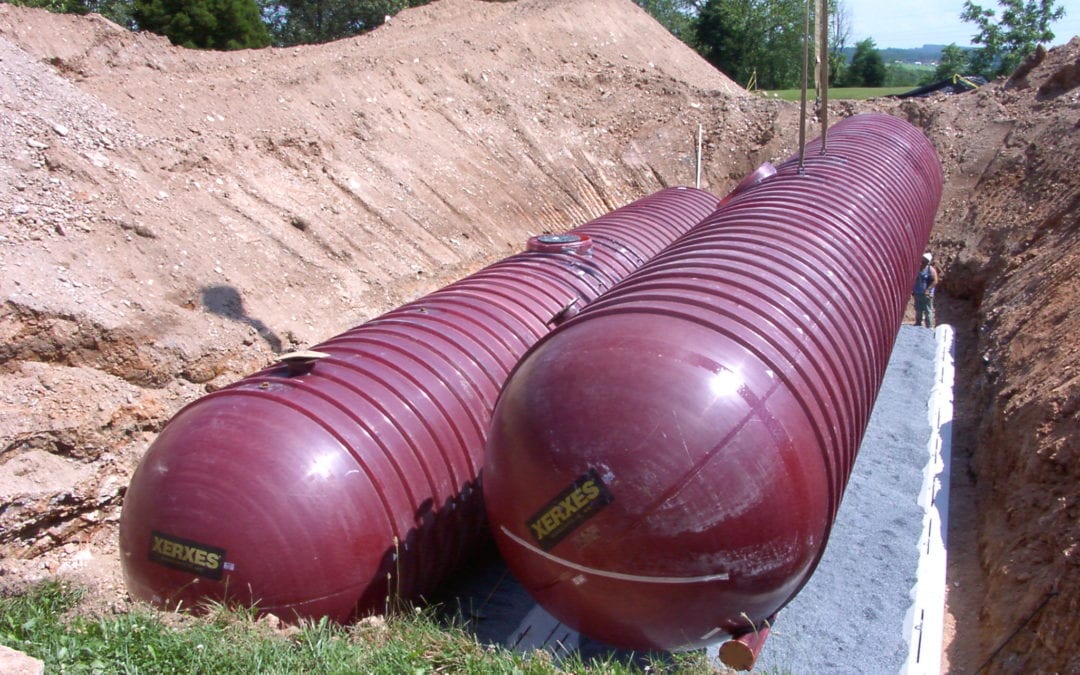
Underground storage tanks (UST) system provides an excellent solution for facilities with limited surface real estate or strict local zoning laws. Placing petroleum storage tanks below grade isolates volatile liquids from surface hazards and accidental impacts. However, buried systems require advanced engineering to provide soil corrosion protection and internal fluid degradation.
Steel Fuel Storage Tanks
Steel fuel storage tanks offer the most cost-effective secondary containment system available for underground applications. Modern steel tanks incorporate advanced outer coatings or composite jackets to isolate the metal shell from corrosive soils.
Steel construction provides high structural rigidity and is fully compatible with standard gasoline, diesel, fuel oil, ethanol, methanol, and traditional petroleum additives.
Fiberglass Underground Storage Tanks
Fiberglass tanks are a completely rust-proof option designed to withstand the aggressive nature of modern ethanol fuels and biodiesel fuel products. They offer several distinct structural advantages over traditional steel, particularly because they resist the internal microbial corrosion caused by water accumulation in alternative fuels.
Northwest Pump distributes a comprehensive lineup of fiberglass configurations tailored to your specific containment requirements, including:
- Single-Wall Fiberglass Tanks: Suitable for specialized applications where external containment vaults are already present.
- Double-Wall Fiberglass Tanks: The modern industry standard for gas station underground tanks, featuring continuous interstitial monitoring spaces.
- Triple-Wall Fiberglass Tanks: Engineered for maximum environmental security in sensitive groundwater zones or municipal protection areas to meet 40 CFR requirements.
- Multi-Compartment Fiberglass Tanks: Designed with internal bulkheads to store multiple fuel grades, such as regular gasoline and diesel, inside a single structural shell.
Above Ground Fuel Storage Tanks and Atmospheric Systems
When underground excavation is restricted by shallow bedrock, high water tables, or environmental zoning, aboveground fuel storage tanks provide a flexible and accessible alternative. Aboveground installations simplify routine maintenance inspections, eliminate complex excavation costs, and allow for rapid facility relocation if operational demands shift.
Northwest Pump supplies premium Modern Welding steel atmospheric tanks intended for the aboveground storage of non-corrosive, stable, flammable, and combustible liquids. These heavy-duty petroleum tanks are engineered to handle fluids that have a specific gravity not exceeding that of water.
To ensure seamless integration with your facility infrastructure, these aboveground fuel tanks can be furnished with stationary support saddles, anti-roll supports, or integrated structural skids for rapid deployment. Our comprehensive aboveground product portfolio includes:
- Horizontal and Vertical Storage Tanks: Tailored configurations to optimize your available facility footprint.
- Horizontal Diked Tanks: Systems featuring built-in outer steel dikes to provide reliable secondary containment without requiring external concrete dikes.
- Fire-Resistant Tanks: Insulated double-wall systems designed to protect stored fuels from external thermal hazards.
- Projectile and Impact-Resistant Tanks: Heavily armored storage options built to withstand extreme external physical impacts in high-risk industrial zones.
Selecting the Right Systems for Gas Station Underground Tanks
Gas station tanks must be secure, reliable, and space-efficient. Station owners need to store multiple fuel types without wasting valuable property. Northwest Pump supplies complete, code-compliant underground fuel tank systems built for tight commercial yards.
We supply multi-compartment fiberglass tanks to maximize your storage options. These systems use secure internal walls to split one large tank into separate sections. This design lets you store regular gas, premium gas, and diesel fuel in a single footprint. It lowers installation costs because you dig fewer holes and use less piping.
A complete retail gas station tank setup uses a few essential parts to stay safe:
- Automatic Tank Gauges: Electronic probes look inside the tank. They check fuel levels and find hidden water.
- Leak Detection Sensors: Double-walled tanks create a built-in safety space. Automated sensors watch this space to flag leaks before fuel reaches the soil.
- High-Performance Piping: Strong, flexible double-wall pipes move the fuel safely from the buried tank to your forecourt dispensers.
Frequently Asked Questions About Commercial Fuel Storage Systems
What are the primary indicators for choosing an underground diesel storage tank over an aboveground system?
Underground fuel tanks are chosen when surface space is limited, or when state and local fire codes restrict the volume of aboveground flammable liquids near occupied structures. Buried tanks offer natural insulation from temperature extremes and are completely protected from vehicle impacts. Aboveground tanks are preferred when soil excavation is impossible due to high water tables, or when operators require rapid installation and simple visual maintenance inspections.
How do ethanol fuels and biodiesel impact the internal wear of a diesel fuel storage tank?
Modern biofuels are hygroscopic, meaning they actively absorb moisture from the surrounding atmosphere. When water settles at the bottom of a steel tank, it facilitates microbial growth that generates corrosive organic acids. Fiberglass underground fuel storage tanks are completely inert to these chemical reactions, making them a rust-proof alternative that eliminates internal corrosion risks without requiring specialized internal linings.
How big are the fuel storage tanks buried under standard gas stations?
Retail gas station tanks typically range in capacity from 10,000 gallons to 30,000 gallons per tank. Most modern high-volume stations utilize 20,000-gallon or 30,000-gallon tanks. Because these systems frequently feature a multi-compartment design, a single 30,000-gallon fiberglass shell can be divided internally to hold 15,000 gallons of regular unleaded, 5,000 gallons of premium gasoline, and 10,000 gallons of diesel fuel.
What unique advantages do multi-compartment gasoline storage tanks offer fleet operators?
Multi-compartment fuel storage tanks allow fleet vehicle operators to manage multiple fuel varieties, such as diesel and gasoline, inside a single structural footprint. This eliminates the need to excavate separate burial pits for multiple single-wall or double-wall tanks. It streamlines compliance tracking, reduces upfront equipment costs, and optimizes available space at private fleet cardlocks and commercial facility yards.
What unique benefits do multi-compartment gasoline tanks provide for fleet fueling facilities?
A multi-compartment tank utilizes internal bulkheads to isolate different fuel products within a single outer shell. This engineering approach allows a fleet vehicle operator to store regular gasoline, premium gasoline, and ultra-low sulfur diesel within a single excavation footprint. This configuration reduces equipment installation costs, simplifies piping runs, and minimizes the required surface footprint.
How do fire-resistant aboveground tanks satisfy local municipal safety codes?
Fire-resistant tanks utilize a dual-wall steel construction filled with a highly efficient, lightweight insulation material. This specialized layer protects the inner fuel storage tank from intense external heat or direct flame exposure for a specified period, usually two to four hours. This thermal protection satisfies strict local fire codes, allowing facilities to store combustible liquids closer to property lines and buildings.
Plan Your Next Fuel Infrastructure Upgrade
Optimizing your commercial fuel storage system requires a technical approach focused on environmental safety, fluid compatibility, and equipment longevity. Northwest Pump is dedicated to building long-term, collaborative relationships with industrial plant managers, engineering contractors, and procurement officers across the West.
We invite you to reach out for a professional, low-pressure consultation regarding your upcoming fuel storage tank project. Let’s review your facility layout, analyze your technical containment specifications, and select the ideal code-compliant equipment package for your operation. Reach out to our sales team for more information by emailing us at sales@nwpump.com, calling 1-800-452-PUMP, or contacting your nearest regional location.
Customer service is our business.
Serving the petroleum and industrial industry for over 65 years.

How can we help?
Our petroleum and industrial staff are here to assist and well- versed in product knowledge and installation protocol. Let us take it from here. For 24-hour assistance, call 1-866-577-2755!